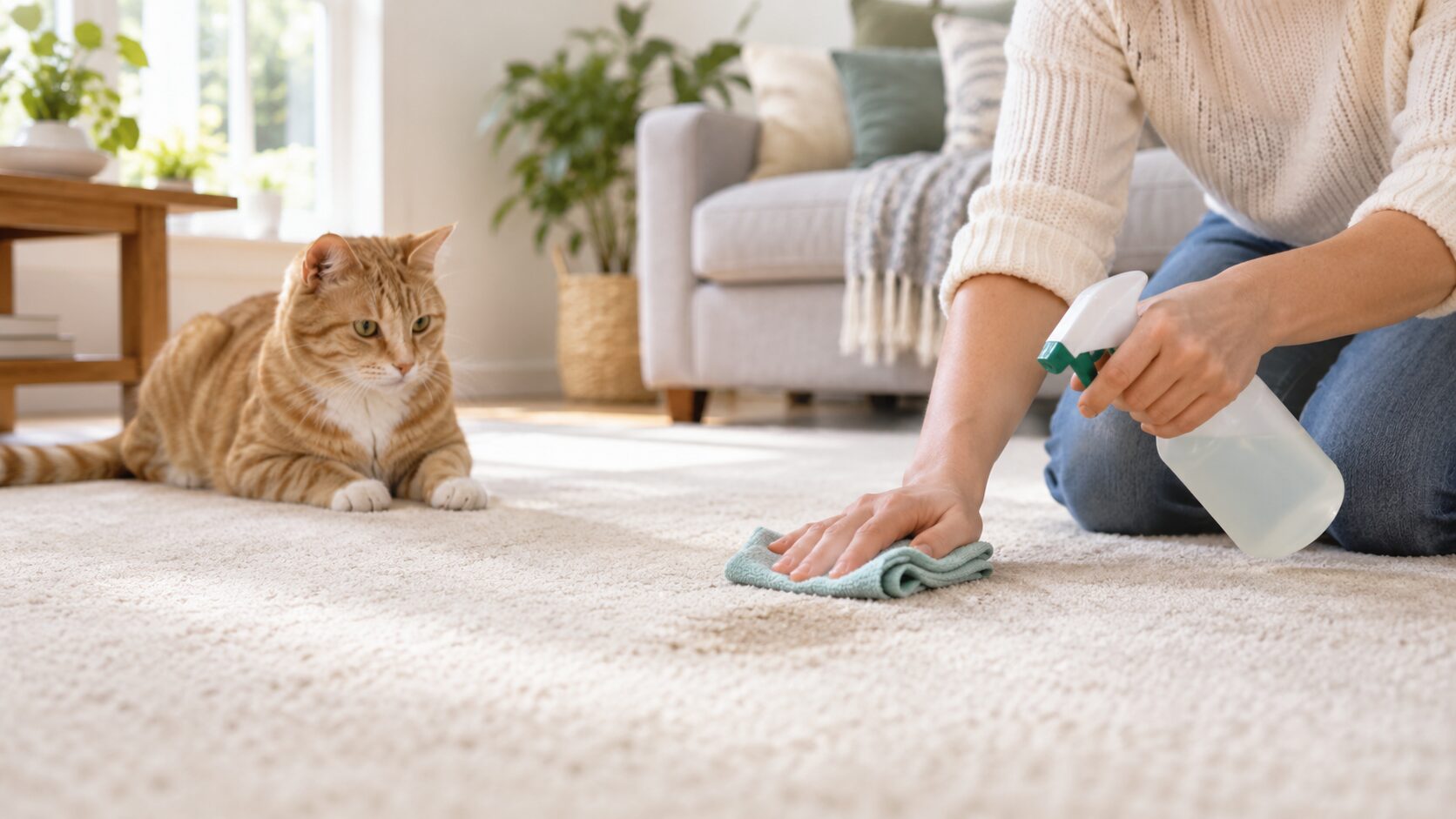
Cat pee has a particularly stubborn smell. You can clean the area, spray it with something fragrant and think you’ve got rid of it, only for the odour to return later.
The problem is that cleaning the visible stain or masking the smell isn’t always enough. If urine has soaked into carpet, upholstery or another absorbent material, residue can remain below the surface.
For persistent cat urine smells, a pet-safe enzymatic cleaner is usually the best option because it is designed to break down the residue causing the odour.
What You Need to Remove Cat Pee Smell
For most cat pee accidents, you’ll need:
- Paper towels or absorbent cloths
- Water
- A pet-safe enzymatic urine cleaner
- Clean cloths
- Carpet or upholstery cleaning equipment where appropriate
White vinegar can sometimes help with initial cleaning or deodorising on suitable surfaces, but it shouldn’t be relied on as the only treatment for persistent urine smells.
Always check that any cleaning product is suitable for the material you’re treating before using it.
Step 1. Blot Up Fresh Urine
If the accident is fresh, remove as much urine as possible before cleaning.
Use paper towels or an absorbent cloth and blot rather than scrub. Scrubbing carpets or upholstery can spread the urine and push it further into the fibres.
Step 2. Clean the Surface
Remove any remaining surface contamination using a cleaning method suitable for the material.
Avoid soaking carpets or upholstery unnecessarily, as excess liquid can carry urine deeper into the padding underneath.
Step 3. Apply an Enzyme Cleaner
Apply a pet-safe enzymatic cleaner to the affected area according to the product instructions.
Make sure the cleaner reaches the full area affected by the urine. If urine has soaked through a carpet into the underlay, for example, lightly spraying the surface may not reach the source of the smell.
Step 4. Let the Enzyme Cleaner Work
Don’t immediately wipe the product away.
Enzymatic cleaners need sufficient contact time to work, so follow the instructions for the product you’re using. Some need to remain wet for a set period, while others are designed to air dry.
Step 5. Repeat If Necessary
Older stains or heavily affected areas may need more than one treatment.
Allow the area to dry fully before checking the result. If the smell remains, repeat the treatment.
How to Remove Cat Pee Smell From Different Surfaces
The basic process is similar, but the best cleaning method depends on the surface.
Carpet
Blot fresh urine immediately before applying an enzymatic cleaner suitable for carpets.
Treat the full affected area rather than only the visible stain, as urine can spread through the carpet fibres and into the underlay.
For larger stains, repeated accidents or urine that has penetrated deeply, professional carpet cleaning can help tackle the affected area more thoroughly.
Sofas and Upholstery
Blot up as much urine as possible before applying an enzyme cleaner suitable for upholstery.
Avoid saturating the fabric unnecessarily, but make sure the treatment reaches any cushion filling affected beneath the surface.
Removable covers can be treated with an enzyme cleaner suitable for washable fabrics, allowed the recommended treatment time, and then washed according to their care instructions.
Mattresses
Blot up as much liquid as possible before applying a suitable enzymatic cleaner.
Mattresses are highly absorbent, so urine may have travelled deeper than the visible stain. Apply enough cleaner to reach the affected depth and gently press it into the area rather than only treating the surface.
Allow the mattress to dry completely before replacing bedding. Older or heavily affected areas may require more than one treatment.
Hard Floors
Wipe up fresh urine as quickly as possible before cleaning the surface.
Sealed hard floors are generally easier to treat because urine cannot penetrate as deeply. Take more care with unsealed wood, laminate joins and porous flooring, where liquid may seep into gaps or absorb into the material.
Clothing and Washable Fabrics
Treat affected fabrics as soon as possible according to their care label.
A good soak in a laundry-safe enzymatic treatment can help remove lingering urine residue before washing.
Check that the smell has disappeared before putting the item in a tumble dryer. If it still smells, treat and wash it again first.
Why Does My House Still Smell Like Cat Pee After Cleaning?
If you’ve cleaned the accident but can still smell cat urine, there are several possible reasons.
The urine soaked below the surface: Carpet underlay, sofa cushions and mattresses can hold urine even when the surface looks clean.
The wrong cleaner was used: A general household cleaner may clean the visible area without fully removing the residue causing the odour.
The entire area wasn’t treated: Urine can spread further than the visible stain.
There’s another affected area: Check behind furniture, around doors, curtains, corners and other less obvious areas.
The area needs another treatment: Older or heavily soaked areas may require several applications of enzymatic cleaner.
If the smell continues to return, a deeper clean may be necessary.
When It’s Time for Professional Cleaning
One small accident is usually manageable at home. Multiple accidents or urine that has soaked deeply into carpets, upholstery or other surfaces can be much harder to tackle.
If urine has penetrated your carpets, professional Carpet Cleaning can help tackle affected flooring more thoroughly.
For a wider clean, our Domestic Cleaning service can help with multiple areas around the home, while Express Cleaning is ideal when you need help tackling a specific area or piece of furniture.
Sometimes living with pets gets messy. Fortunately, you don’t have to tackle all of that mess by yourself.